Three-Day Workshop on “Internet of Things (IoT) and Machine Learning    |Career Awareness Program (Trending technologies)    |Notice For Certificate Collection of M.Tech/B.Tech from and on 24/03/2023    |Final Semster Marksheet Collection Batch 2023    |
gimt-india-media-element

Electronics & Communication Engineering

Overview

Since its inception, the Department of Electronics and Communication Engineering at GIMT has been committed to providing a strong laboratory-based learning environment that develops skilled professionals and encourages higher studies and research. The department continuously updates its curriculum to align with the evolving needs of the electronics industry and research sectors. With a team of qualified and experienced faculty members and staff, it focuses on imparting quality education, practical training, and awareness of emerging technologies. Through a balanced blend of theoretical knowledge, hands-on experience, and exposure to the latest technological advancements, the department prepares students to excel in both industry and academia.

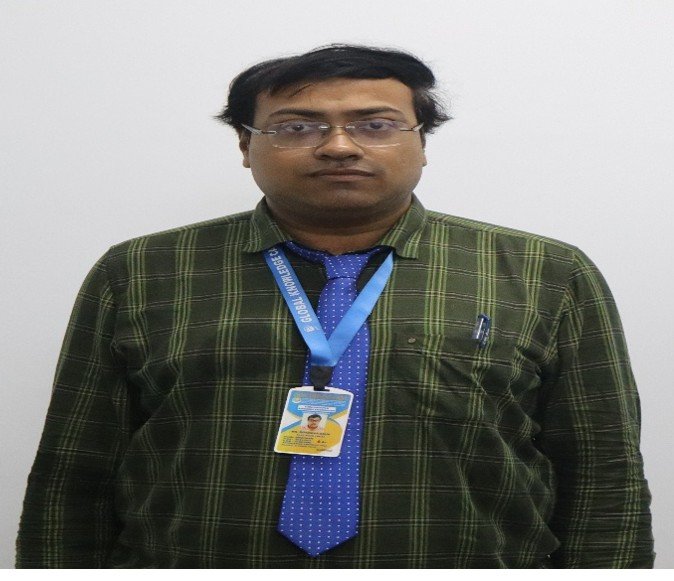
Message from the HoD

gimt-india-media-element
The Department of Electronics & Communication Engineering, established in 2009, offers an AICTE-approved four-year B.Tech. programme affiliated with Maulana Abul Kalam Azad University of Technology (MAKAUT), West Bengal. The department is committed to nurturing competent, innovative, and ethically responsible engineers who are well-equipped to meet the challenges of an ever-evolving technological landscape. With a dedicated team of faculty members and well-equipped laboratories, we strive to provide a strong academic foundation through quality teaching, practical learning, and continuous innovation. We foster an environment that encourages research, creativity, critical thinking, and lifelong learning. Our faculty members are committed to mentoring students, promoting academic excellence, and supporting their professional and personal growth, enabling them to become skilled engineers and responsible contributors to society.

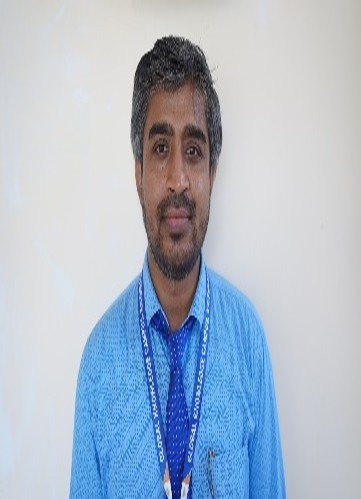
Dipankar Saha

Head of the Department (HOD), Department of Electronics & Communication Engineering

Enquiry Form

Programs Offered

PROGRAMS
Intake Capacity
YEARS
SEMESTER
ELIGIBILITY CRITERIA
B.Tech in Electronics & Communication Engineering
23 Seats
4
8
1. Academic Qualification:
Passed 10+2 (or equivalent) examination with a minimum of 45% aggregate marks in Physics and Mathematics (compulsory), along with one of the following: Chemistry / Biology / Biotechnology / Computer Science / Information Technology / Information Practices / EngineeringGraphics / Business Studies. • Passed in English (minimum 30% marks) in 10+2. Must have cleared both Theory and Practical in the above subjects.
2. Entrance Exam:
Must have a valid rank in WBJEE or JEE (Main). (for 4 years B.Tech) JELET (for 3 years B.Tech, after Diploma)
Note-Eligibility criteria are subject to revision by the regulatory authority.

Curriculum

For B.Tech. 1st Year, Please visit:

For B.Tech. 2nd 3rd & 4th Year, Please visit

Career Opportunities

A degree in Electronics and Communication Engineering opens doors to diverse career opportunities in sectors such as telecommunications, IT, consumer electronics, embedded systems, automation, defense, artificial intelligence, machine learning, and semiconductor industries. ECE graduates are in high demand for their expertise in designing, developing, and maintaining modern communication and electronic systems. The rapid growth of technologies such as 5G, the Internet of Things (IoT), smart devices, and AI continue to expand career prospects in both the public and private sectors, while also creating opportunities for higher studies, research, innovation, and entrepreneurship.

Laboratories & Infrastructure

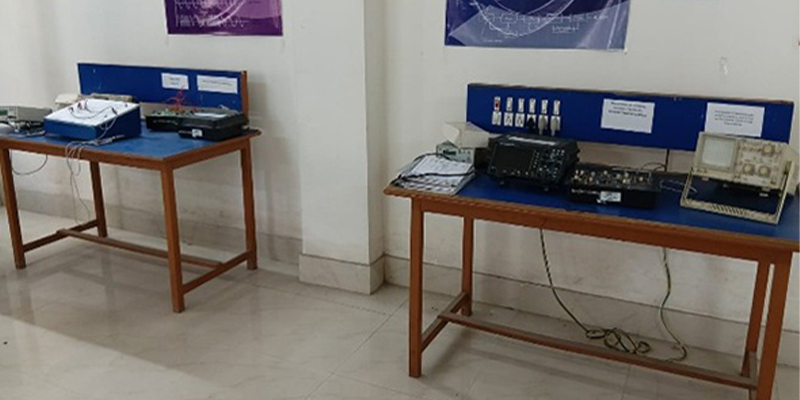
Communication Laboratory

The Communication Laboratory provides students with practical knowledge and experimental skills in the field of communication engineering. It complements classroom learning by enabling hands-on analysis, design, and testing of analog and digital communication systems. The laboratory covers fundamental concepts such as amplitude, frequency, and phase modulation, along with advanced topics including multiplexing, line coding, and digital modulation techniques. Equipped with modern trainer kits, simulation software, and measuring instruments, the laboratory allows students to visualize communication processes, validate theoretical concepts, and analyze system performance under various operating conditions, thereby strengthening their technical and analytical skills.

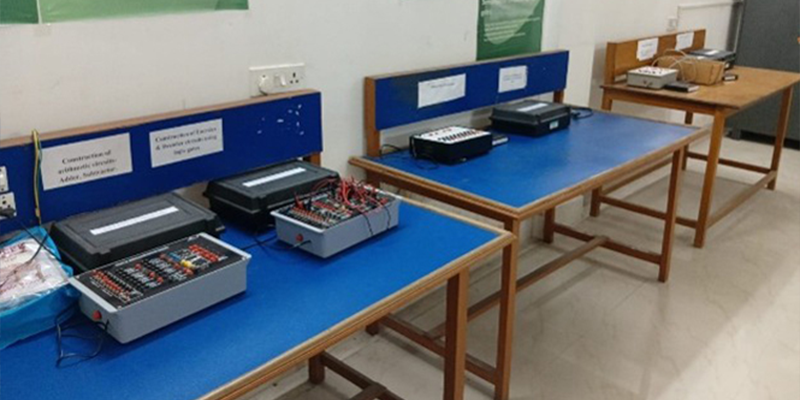
Digital Electronics and Microprocessor Laboratory

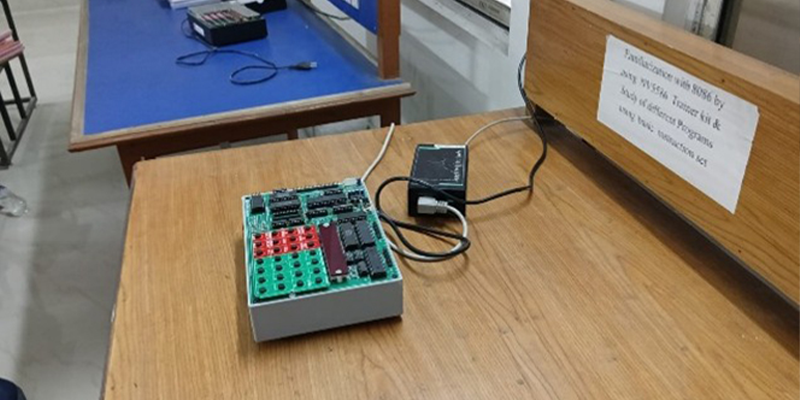
The Digital Electronics and Microprocessor Laboratory provides students with hands-on experience in digital circuit design and processor-based systems. Students explore fundamental concepts of logic gates, combinational and sequential circuits, flip-flops, counters, shift registers, and display systems. The Microprocessor and Microcontroller section focuses on programming, hardware interfacing, and real-time applications using platforms such as 8085, 8051, and Arduino. Through practical experiments and project-based learning, the laboratory enhances students’ understanding of digital systems, embedded technologies, and the application of microprocessors and microcontrollers in modern electronic devices.

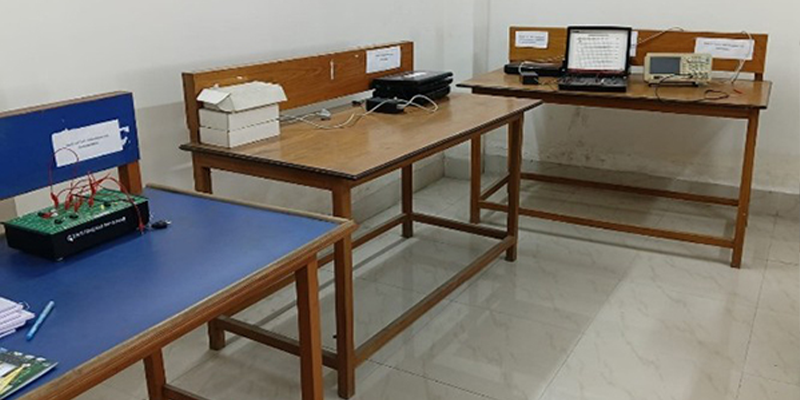
Analog Electronics, Electronics Devices and EM Wave Laboratory

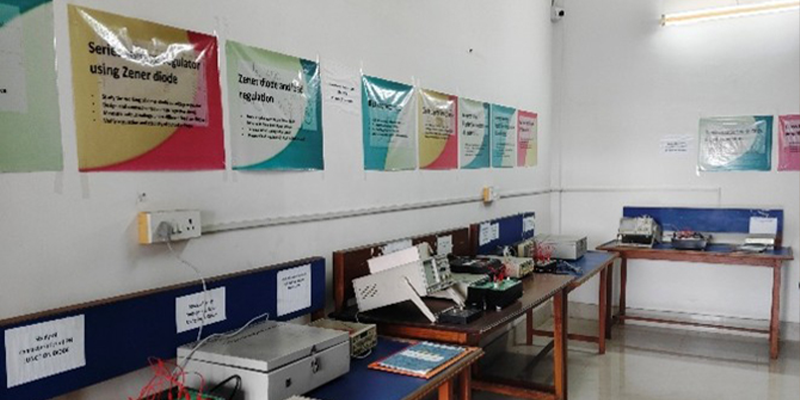
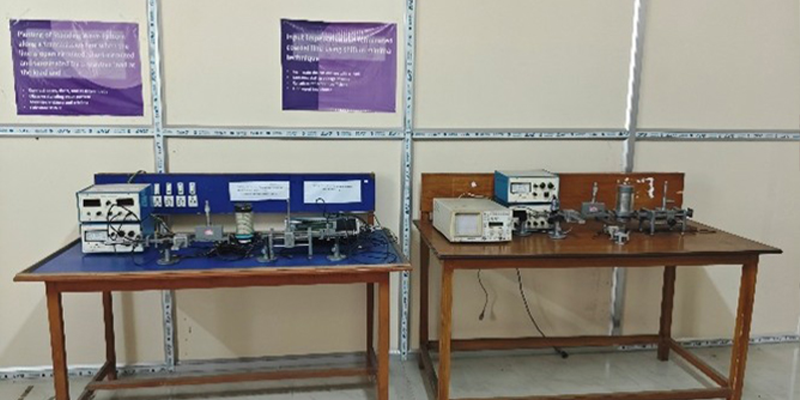
The Analog Electronics, Electronics Devices, and EM Wave Laboratory provide students with hands-on experience in circuit design, analysis, testing, and troubleshooting. Equipped with modern instruments such as breadboards, power supplies, function generators, oscilloscopes, digital multimeters, and electronic component kits, the laboratory supports practical learning of electronic devices and systems. Students perform experiments on diode and transistor characteristics, rectifiers, amplifiers, oscillators, and operational amplifier applications. The EM Wave and Antenna Laboratory offer advanced experimental facilities for studying transmission lines, RF antennas, and pyramidal horn antennas, helping students bridge the gap between theoretical concepts and real-world applications in electromagnetics and communication engineering. 

Faculty Details

ImageNameQualificationsExperience & PublicationSubject Area of Teaching
Saswati Dey, Assistant Professor

Saswati Dey, Assistant Professor

Ph.D (Pursuing), M.Tech, B.Tech
Academic: 16 Years No. of publications: 10
Electronics Device, VLSI, Digital Electronics, Analog Electronics, Embedded Systems
Dipankar Saha, Assistant Professor

Dipankar Saha, Assistant Professor

PH.D Pursuing, M.Tech, B.Tech
Academic: 14 Years No. of publications: 11
Microprocessor & Microcontroller, Digital Signal Processing, Antenna
Dr. Debashish Pal, Associate Professor

Dr. Debashish Pal, Associate Professor

Ph.D, M.Tech, B.E
Academic: 7 Years Research: 1 Year No. of Publications: 30
Electronic Devices, Electromagnetic Theory, Control systems, Analog and Digital Electronics, Signals and Systems, Analog Communication Systems, Circuit Theory

Research & Innovation

The Department of Electronics and Communication Engineering actively promotes research and innovation by encouraging faculty members to undertake quality research and disseminate their work through reputed academic platforms. The department has made significant scholarly contributions, with 11 research papers published in international journals, 5 papers presented at international conferences, and 5 book chapters authored by faculty members along with students. These achievements reflect the department’s commitment to advancing knowledge, fostering innovation, and strengthening its research profile through collaborations and high-quality academic output.

Enquiry